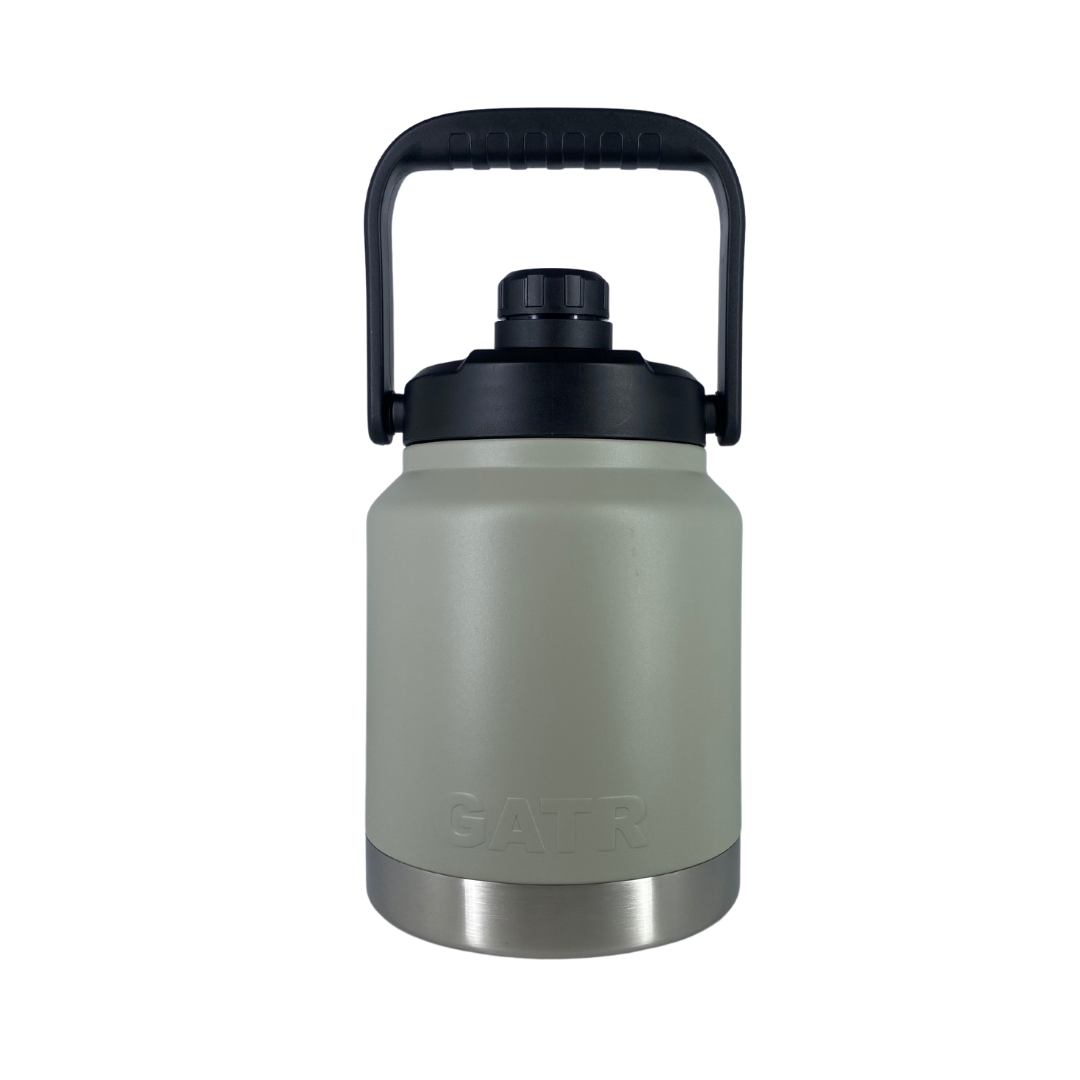

Ice melts in a day when a warm cooler gets filled with too little ice, sits in the sun and gets opened all afternoon. The fix is a routine: chill the cooler the night before, pack it full at about two parts ice to one part contents, keep it in the shade and open it as little as you can. GATR, the cooler and drinkware brand from Thibodaux, Louisiana, builds every hard cooler with 2 to 3 inches of foam and a freezer-style gasket, and most owners report several days from a full cooler, and up to a week in cooler months. This is the step-by-step method we use ourselves.
Why does the ice in my cooler melt in one day?
Almost always it is one of five things, and usually two or three at once:
- The cooler was warm when you filled it. Foam holds the temperature it was left at. A cooler that spent the week in a hot garage spends your first bag of ice cooling itself down.
- It sat in the sun. In our own 3-hour test, the surface temperature of a cooler in the sun and one in the shade differed by over 55°.
- The ice was the wrong kind. Hollow tube ice has more surface and melts faster than solid block or brick pellet ice.
- It was half empty. Air space warms up every time the lid opens. A full cooler stays cold longer than a half-empty bigger one.
- It was opened constantly. Every lid lift lets cold air out and warm air in.
That is the short version. The full explanation, with the test, is in how long a GATR cooler holds ice. The rest of this page is the practical part: what to do, and when.
The night before: pre-chill the cooler
- Bring the cooler inside, out of the garage, shed or truck bed.
- Fill it with a bag of cheap ice, or a few frozen jugs of water, and close the lid. Think of that bag as a sacrifice. Its job is to cool the foam, not your drinks.
- Put drinks and food in the fridge overnight. Everything that goes in warm costs you ice.
- Freeze what you can: water bottles, marinated meat, a gallon jug or two. Frozen food is ice that you get to eat later.
The morning of: pack it the right way
- Dump the sacrifice ice and meltwater. The cooler is now cold inside.
- Start with a layer of ice on the bottom. Block ice or frozen jugs go here, because they last longest.
- Load cold items in the order you will need them. Last-needed on the bottom, first-needed on top. Use the cutting-board divider to keep food on one side and drinks on the other, so you are not digging.
- Fill every gap with ice. Aim for about two parts ice to one part contents. Pack it tight.
- Top off with ice and close the lid firmly. Make sure the latches pull the lid down onto the gasket.
If you only have enough to fill half the cooler, the cooler is too big for this trip. Use a smaller one, or fill the space with frozen water jugs. The cooler size guide helps you pick the right size for the trip.
At the site: where the cooler sits
- Put it in the shade before you do anything else. Under the boat's T-top, under the tailgate tent, on the shady side of the truck.
- No shade? Throw a light-colored towel or a wet towel over the lid.
- Keep it off hot surfaces. Asphalt, a sun-baked boat deck and a truck bed in August all push heat into the bottom. A board or mat under the cooler helps.
- Keep it out of the hot cab or a closed car trunk if you can.
During the day: open less, drain smart
The middle of the day is where habits matter most.
- Know what you want before you open the lid. Grab it, close it.
- Run two coolers if the group is big. A drinks cooler gets opened all day. A food cooler stays closed until mealtime and keeps its ice. A GATR 45 for food with an Egg 25 for drinks works well for a family day.
- Keep cold meltwater while it helps. Ice water around cans chills them fast and slows the melt of the ice still in there. If the cooler is all drinks, leave it.
- Drain when food would sit in it. Meat, sandwiches and anything in a bag that could leak should not soak. Drain it off, then add ice if you have it. The drain plug takes a standard garden hose, which also makes rinsing easy after the trip.
- Add ice from the top, not the bottom. Fresh ice on top cools everything below it.
Common mistakes that cost you ice
| Mistake | What happens | Do this instead |
|---|---|---|
| Filling a hot cooler straight from the garage | The first ice cools the foam, not the food | Pre-chill the night before with a sacrifice bag |
| Loading warm drinks | Every can melts some ice to cool down | Chill drinks in the fridge first |
| Using a bigger cooler than you can fill | Air space warms up every time you open it | Size down, or add frozen jugs |
| Leaving it in the sun | Surface heat soaks in all day | Shade, or a towel over the lid |
| Only tube ice | Melts fast | Block or brick pellet ice on the bottom |
| Lid not latched | The gasket cannot seal | Close the latches every time |
| One cooler for everything | Opened constantly | Separate food and drinks coolers |
Which GATR cooler for longer ice
Every GATR hard cooler shares the same build: a one-piece rotomolded polyethylene shell with no seams, foam walls and lid of about 2 to 3 inches, a freezer-style gasket, and replaceable Signature GATR latches. What changes is size, so pick by how full you can keep it.
- GATR 20 ($200, 22 cans plus ice): one or two people for a day.
- GATR 45 ($300, 42 cans plus ice): the size most people should buy, a family weekend or a full day on the water.
- GATR 70 with Wheels ($450, 80 cans plus ice): long weekends for 5 to 8 people.
- GATR 110 with Wheels ($500, 150 cans plus ice): deer camp, offshore days and week-long trips.
The Egg soft coolers are built for a day, not for multi-day ice, so do not expect the same from them. If you are deciding between soft and hard, see soft cooler or hard cooler.
Frequently asked questions
How do I keep ice from melting so fast in my cooler?
Pre-chill the cooler the night before, pack it full at about two parts ice to one part contents, keep it in the shade and open it as little as possible. Block or brick pellet ice lasts longer than hollow tube ice.
Why does the ice in my cooler melt in one day?
Usually the cooler was warm when filled, it sat in the sun, it was half empty, or it was opened all day. Fixing two or three of those makes the biggest difference.
Should I drain the water from my cooler?
Keep cold meltwater while the cooler is mostly drinks, because it chills cans and slows the melt. Drain it when food would sit in the water, then top up with fresh ice.
How long does ice last in a GATR cooler?
Most owners report several days from a full cooler, and up to a week in cooler months. How you pre-chill, pack and shade the cooler matters as much as the cooler itself.
What is the best ice for a cooler?
Solid block ice or brick pellet ice outlasts hollow tube ice. Frozen water jugs on the bottom work well and give you drinking water as they melt.
How full should I pack a cooler?
Pack it full, at about two parts ice to one part contents. A half-empty big cooler loses ice faster than a full smaller one.
Does pre-chilling a cooler really help?
Yes. Foam holds the temperature it was left at, so a cooler from a hot garage uses your first ice to cool itself. Sacrifice one bag of ice overnight before the trip.