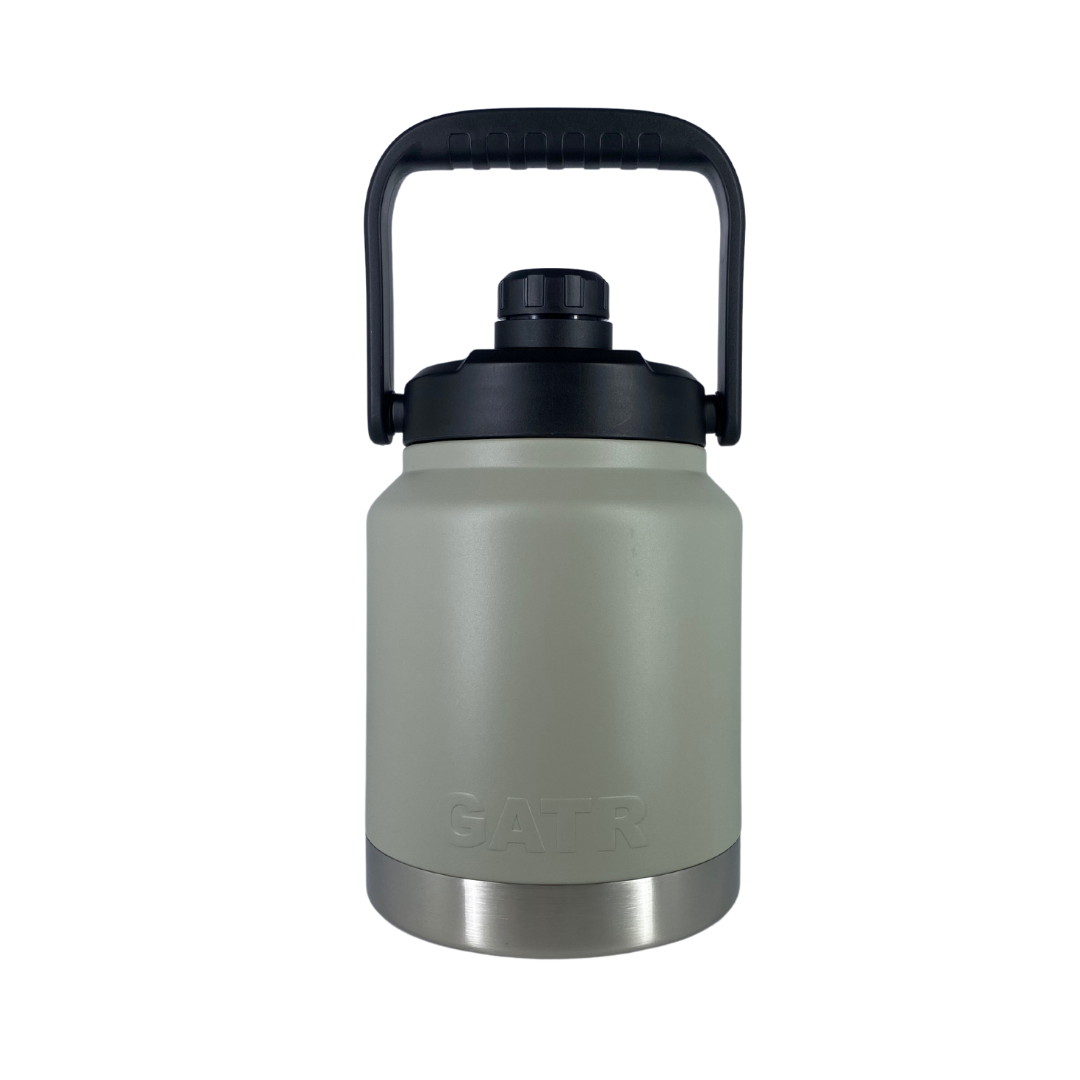

Most GATR owners get several days of ice out of a full cooler, and closer to a week in the cooler months — but anyone who gives you one number for that is guessing on your behalf. Ice retention is not a fixed property of a cooler. It is the result of five things, four of which are entirely in your hands.
Here is the honest version, from the people who build them in Thibodaux.
Why we don't stamp a "days of ice" number on the box
It would be an easy claim to make and a hard one to keep. A cooler sitting in the shade on a January duck hunt and the same cooler riding in the back of a truck in August are two completely different machines, and the number that flatters us in the first case would embarrass us in the second.
So we tell customers what actually drives the result instead. Our reviews regularly mention several days, and up to a week in colder months. What decides which end of that range you land on is below.
The five things that decide your ice life
1. Pre-chilling — the one most people skip
Our rotomolded coolers are built with a 2–3 inch layer of foam insulation depending on size. That foam holds whatever temperature you last left it at, and it will pull heat out of your ice until it gets there.
Load a cooler that has been sitting in a 72° house and you are already ahead. Load one that has been sitting in a 95° garage and your first bag of ice is spent cooling the cooler, not your food. Where possible, store it somewhere cool the day before and — for a long trip — sacrifice a cheap bag of ice overnight to bring the foam all the way down.
2. Where the cooler sits
Think shade. If you feel better under the bleachers at the ball field, so does your cooler.
In one of our own three-hour product tests, coolers left in direct heat versus coolers left in shade finished with a surface temperature difference of over 55°. Three hours. No other single decision on this list is that cheap or that effective.
3. The ice you buy
Not all ice is created equal, silly as that sounds. Solid brick pellets outlast the hollow tube pellets from the gas station door by a wide margin, because there is simply more frozen water per piece and less surface area doing the melting.
4. How full you pack it
Load it up. A tightly packed cooler holds cold far better than a half-empty one, because empty space is warm air your ice has to keep cooling every time the lid comes up.
The working rule for planning: about two parts ice to one part contents by volume. Underfilling is the most common reason a cooler that should have lasted the weekend gave up on Saturday afternoon.
5. How often you open it
Every time that lid opens, the cold air falls out and warm air takes its place. Same reason your parents told you to pick a side of the door and stay there while the AC was running.
On long trips, the fix is two coolers: drinks in one that gets opened forty times a day, food in one that gets opened twice. It costs less than you would think and it changes the whole trip.
What every GATR hard cooler brings to the problem
- One-piece rotomolded construction — no seams, no weak points, and a wall thick enough to hold a 2–3 inch foam layer
- A freezer-style gasket and our signature GATR latches, so the seal is doing its job every time you close it
- A dual-purpose drain plug sized to a standard hose pipe — quick draining, and easy washing after a crawfish boil
- Non-slip GATR grip feet, which keep the cooler off a hot deck or truck bed instead of soaking heat up through the base
- A limited lifetime warranty against manufacturing defects
"Great cooler! I bought this cooler based on all the different positives that I have heard about GATR. I was not disappointed! I work outdoors and the cooler sits in the back of a hot vehicle and still holds ice and keeps the drinks cold! Definitely will be purchasing a larger one. Y'all built a great product."
Michael K. — GATR 20 Rotomold Hard Cooler (20QT)
Ice retention by size: what to plan for
Bigger coolers hold cold longer, for the same reason a big pot of soup takes longer to cool than a mug of it — more mass, less surface area per unit of volume. Use this to plan the trip, not to set your watch by.
| Cooler | Capacity | Insulation | What it is realistically for |
|---|---|---|---|
| GATR 20 | 22 cans + ice | 2–3" foam | Day trips, work truck, one or two people, a single day of drinks |
| GATR 45 | 42 cans + ice | 2–3" foam | A weekend for a family, a camping trip, a full day on the water |
| GATR 70 w/ Wheels | 80 cans + ice | 2–3" foam | Long weekends, big groups, tailgates, multi-day trips with a restock |
| GATR 110 w/ Wheels | 150 cans or 100 bottles + ice | 2–3" foam | Offshore days, hunting camp, week-long trips, keeping game cold |
| GATR Egg 12 | 12 cans or 10 bottles + ice | Soft-sided | A few hours out — lunch, the golf cart, a walk to the beach |
| GATR Egg 25 | 30 cans or 15 bottles + ice | Soft-sided | A full day out without sweating or leaking, carried on your back |
Capacities are GATR's published can counts. Soft coolers are built for a day, not a week — that is what they are for.
Get more days out of the cooler you already own
- Store it somewhere cool the day before, and sacrifice a bag of ice overnight for long trips
- Buy solid brick ice, not the hollow tube kind
- Fill it — roughly two parts ice to one part contents, and top up any air gaps with towels
- Put it in the shade the moment you arrive, and off hot ground if you can
- Split drinks and food into separate coolers when the trip runs past two days
- Leave the meltwater in until you need the space — cold water is still cold, and draining it early costs you hours
- Keep the gasket clean and seated; a gasket packed with grit is a lid that never quite closes
"The GATR 110 is an extremely well built cooler. The 3 compartment design is extremely helpful for dividing ice, drinks, and food. The cooler retains ice on long trips. The customer service at GATR is second to none and if you haven't been by their store in Thibodaux; it is a must see!"
Chase R. — GATR 110 Rotomold Hard Cooler (110QT with Wheels)
What kills ice fastest
- A warm cooler loaded straight out of a hot garage
- A half-empty cooler with a lot of air in it
- Direct sun on the lid all afternoon
- Draining the meltwater the moment it appears
- Opening it every few minutes because the drinks and the food are in the same box
- A gasket that has grit in it, or latches that are not fully closed
Which GATR fits the trip you're planning
If you already know how long you will be out and how many people you are feeding, the size guide walks through it properly — including where wheels stop being a luxury and start being the reason you take the cooler at all.
If you are somewhere between two sizes, take the bigger one. A cooler that is too big can be packed tight with an extra bag of ice. A cooler that is too small cannot be made bigger.
Frequently asked questions
How long does a GATR cooler hold ice?
Several days in most conditions, and up to a week in colder months, based on what our customers report. We do not publish a single figure because ice retention depends on pre-chilling, shade, ice quality, how full the cooler is and how often it is opened — five variables that change the answer more than the cooler does.
Why did the ice in my cooler melt in one day?
Almost always one of three things: the cooler was warm when you loaded it, it was half empty, or it sat in direct sun. Pre-chill it, pack it full, and put it in the shade — most people get a large multiple of their previous result from those three changes alone.
How much ice should I put in?
Plan on about two parts ice to one part contents by volume. Fill the air gaps rather than leaving them.
Should I drain the water as the ice melts?
Not until you need the space. Ice-cold meltwater keeps the contents cold and slows the remaining ice down. Drain it when you are repacking or when the cooler needs to be lighter to carry.
Does block ice last longer than cubed ice?
Yes. Solid brick pellets and block ice outlast hollow tube pellets and small cubes. A mix works well in practice — block at the bottom for endurance, cubes on top to fill gaps and chill fast.
Do bigger coolers hold ice longer than smaller ones?
Generally yes, when both are packed properly. A larger volume of ice has less exposed surface relative to its mass, so it melts more slowly. A well-packed GATR 45 will still beat a half-empty GATR 110.
How much insulation is in a GATR cooler?
Our rotomolded hard coolers are built with a 2–3 inch layer of foam insulation, depending on the size of the cooler.
Do the GATR Egg soft coolers hold ice as long as the hard coolers?
No, and they are not meant to. The Egg 12 and Egg 25 are built for a day out without sweating or leaking. If you need multi-day cold, take a rotomolded hard cooler.
Does customising a cooler with pads or engraving affect ice retention?
No. Custom cooler pads sit on the outside of the lid and engraving is done on drinkware. Neither touches the insulation or the seal.